When parents ask what outdoor learning is, they’re usually expecting a simple answer. Most people picture forest school - fires, tree climbing, perhaps sport. And those things absolutely have value. Done well, they can be powerful.
But outdoor learning can, and should, be more than that.
Outdoor learning is an approach to primary and secondary school education that takes children outside the confines of a traditional classroom and into the natural environment. Students build a connection with nature by participating in hands-on experiences that develop critical thinking and problem-solving skills while nurturing creativity and curiosity.
In this blog, we will explore how we define outdoor learning at Liberty Woodland School, how it is at the root of all our students’ learning experiences, and what benefits it offers young people.
How We Define Outdoor Learning
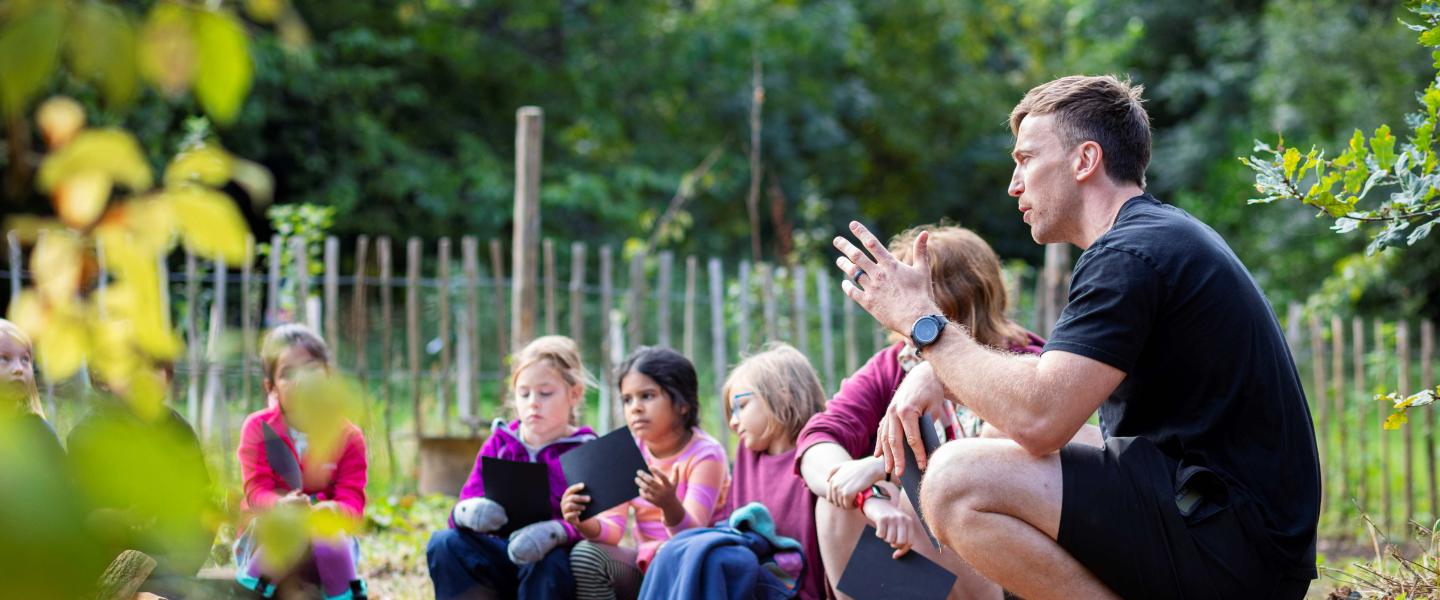
At Liberty Woodland School, our learning environments are rooted in the outdoors. Our students have access to beautiful 4.5-acre grounds where they participate in lessons, complete projects, move around, and explore.
We believe outdoor learning deepens the learning experience, builds focus, improves mental health, and makes education more meaningful and fulfilling.
Outdoor Learning as Education, Not an Add-On
For us, outdoor learning is intellectually demanding, project-based education delivered in an environment that helps children think more clearly.
Children debate literature under trees. They tackle complex mathematics at outdoor tables. They design, test and refine scientific investigations in the open air. They undertake sustained projects requiring critique, collaboration, redrafting and persistence.
Expectations are high. Standards matter. The work is rigorous. The only thing that’s different from traditional classroom-style teaching is the environment in which that work happens.
At Liberty Woodland School, outdoor learning isn’t a weekly session bolted onto the timetable. It isn’t a break from academic work. And it isn’t a softer alternative to “serious” learning.
Our students aren’t outside to escape the curriculum. They are outside to deepen it.
Environment as the Third Teacher
Environment matters in education more than we often admit. We tend to focus on curriculum, teaching and outcomes. While these are all important, it is the setting and environment itself that can shape how children think, feel and engage.
Modern childhood is busy and often overstimulating. Many children move between classroom, car and screen with little space in between. Even highly capable children can feel quietly overwhelmed.
By changing the learning environment, something can shift.
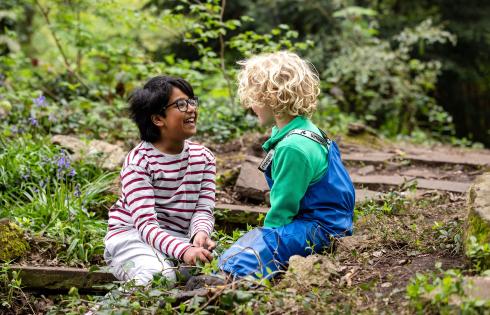
In a natural setting, with light, air and space, bodies settle. Conversation slows. Thinking deepens. Bird song, sunshine, leaves blowing in the breeze…these are not distractions; they are grounding. We see students can focus more outside, not less.
There is also a growing recognition that time in nature is not just beneficial, it is necessary. It is increasingly used to support mental health and well-being. That matters.
We are dedicated to protecting the mental health and well-being of our primary and secondary school children. Our students are surrounded by vast green spaces and taught to practice mindfulness, helping to reduce stress and increase happiness.
Learning by Doing
We are not taking children outside as a break from learning. We are creating the conditions in which learning happens best.
Children are not designed to sit still for hours. Outdoors, movement becomes part of the process. They walk, gather, build, sketch, and test. That movement strengthens memory, problem-solving and creativity.
Outdoor learning does not lower academic expectations. Instead, it encourages hands-on learning experiences, making positive learning outcomes more attainable.
More Than “Being Outside”
Outdoor learning is often misunderstood as simply giving children more time outdoors.
That is not what we mean.
Without purpose, structure and ambition, time outside risks becoming disconnected from meaningful learning.
At Liberty Woodland School, the outdoor environment is used deliberately. It is planned, purposeful and academically focused. The question is not “how often are children outside?” It is “what kind of thinking is happening in the natural environment today?”
The Benefits of Outdoor Learning
Outdoor learning provides many benefits for both primary and secondary school children. Significant benefits include:
- Encourages personal development: Outdoor learning can improve students’ self-esteem, confidence, and social skills. It can also develop other skills such as decision-making, problem-solving, risk assessment, and creative thinking.
- Improves academic performance: Changing the learning environment from a traditional classroom to an outdoor space can improve focus and make students more engaged. This can help make learning meaningful and improve academic performance.
- Protects mental health and well-being: There is a correlation between positive mental health and time spent outdoors. Outdoor learning encourages children to engage with nature and protects their mental health and well-being.
- Builds environmental awareness: Children connecting and interacting with the outdoors can make them feel more responsible for their environment. They learn to appreciate the world around them and want to protect it.
- Preserves childhood: Modern life has changed the way in which children experience growing up - they spend more time indoors and behind a screen. Outdoor learning helps combat this by giving children the opportunity to engage with the outside world and reconnect with childhood.
Discover Outdoor Learning at Liberty Woodland School
At Liberty Woodland School, outdoor learning is not an addition to education. It is how education is delivered. In a world where many young people feel overstimulated and under pressure, the environment in which they learn matters more than ever.
If you would like to see what this looks like in practice, I warmly invite you to learn more about Liberty Woodland School and attend one of our upcoming open days.
Explore our stunning 4.5-acre campus.. Experience our progressive, outdoor learning approach. Discover what education can look like when environment and ambition work together.
Visit our school in Morden and book to attend an open day today.