How project-based learning works at Liberty Woodland School
Giving children the choice
Our educators begin by identifying big-picture concepts or essential questions that spark curiosity. From these foundations, students help shape the direction of their learning by choosing specific areas of interest within the broader topic.
This approach empowers them to take ownership of their education, encouraging independent inquiry and problem-solving.
Throughout each project, students are guided by educators who act as facilitators rather than traditional teachers, fostering an environment of exploration and discovery.
Learning across subjects
Each project is structured to integrate multiple subjects such as science, mathematics, and literacy, offering students the opportunity to see how these areas of learning connect and apply in the real world.
For example, a project on sustainability might involve researching environmental science, developing mathematical models for energy use, writing persuasive essays on policy changes, and creating presentations to share findings with the community.
This interdisciplinary approach helps students build a deeper understanding of content while developing essential life skills like communication, teamwork, and resilience.
Curiosity beyond the classroom
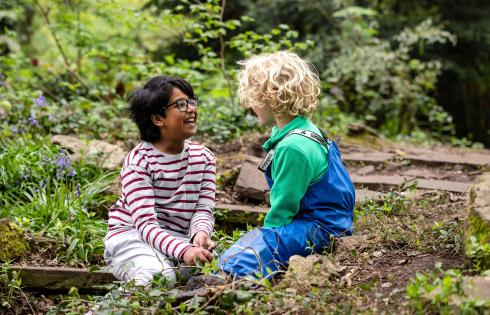
Our outdoor education focus complements project-based learning by encouraging students to take their projects beyond the classroom walls.
Nature often becomes both a setting and a subject of inquiry, where students might engage in field studies, data collection, or conservation efforts.
These experiences connect students to the world around them, promoting environmental stewardship and hands-on learning.
Assessment and exhibition
Assessment in project-based learning at Liberty Woodland School is authentic and ongoing. Instead of relying on traditional tests, students present their projects to peers, teachers, and sometimes even community members, receiving feedback and refining their work.
These presentations may take the form of exhibitions, performances, or digital portfolios, showcasing not just the end product, but the entire learning process. Reflection is a key component, where students review their own progress, consider challenges, and celebrate successes.