
Why does it matter?
Childhood has changed. Days are more structured. Time is increasingly spent indoors, often in front of screens. Many children move between classroom, car and device with very little space in between.
This has implications for how children feel and how they learn.
Rising levels of anxiety, reduced attention spans and lower levels of physical activity are now well documented. Schools cannot ignore this context. The environment in which children learn matters.
In this blog, we discuss the key benefits outdoor learning has on young children and their education and development. We also explore the ways in which we at Liberty Woodland School incorporate outdoor learning into our everyday curriculum.
The Key Benefits of Outdoor Learning
1. Environment and Cognitive Function
There is a growing body of research showing that time in natural environments supports attention, memory and cognitive performance.
Studies on attention restoration theory suggest that exposure to natural settings allows the brain to recover from directed attention fatigue. In simple terms, children are better able to concentrate after spending time in environments that are less cognitively demanding.
We see this play out in practice every day.
In outdoor, natural environments, children often sustain focus for longer. They are more able to engage in complex thinking and problem-solving. Distraction reduces, not increases.
This is not about preference. It is about how the brain functions.
2. Supporting Regulation and Focus
The physical environment also affects emotional regulation.
Natural light, fresh air and space all contribute to lower stress levels. Time in nature has been linked to reductions in cortisol and improvements in mood. In the UK, social prescribing increasingly includes time outdoors as part of mental health support.
For children, this matters.
When children feel calmer, they are more able to manage frustration, sustain attention and engage in learning.
Outdoors, movement becomes part of the process rather than something to suppress. Walking, building, sketching and physically testing ideas all support cognitive processing.
This is not a break from learning. It enables it.
3. Physical Movement and Learning
There is strong evidence linking physical movement with cognitive development.
Movement supports memory formation, improves executive function and enhances problem-solving. Yet much of traditional schooling still requires children to remain seated for extended periods.
Outdoor learning shifts this dynamic.
Children move as they learn. They interact with materials, space and each other. Concepts become more tangible. Ideas are tested, not just discussed.
This leads to deeper understanding and stronger retention over time.
4. Building Resilience Through Real Experience
Resilience cannot be taught in theory. It develops through experience.
Outdoor learning naturally introduces manageable challenges. Materials fail. Designs need adjusting. Conditions change.
These are not barriers to learning. They are part of it.
Children learn to adapt, to persist and to improve their work. Over time, this builds confidence that is grounded in experience rather than reassurance.
5. Belonging and Participation
The environment also influences how children relate to one another.
In outdoor settings, collaboration becomes more natural. Tasks are shared. Problems are solved collectively. Conversation flows more easily.
This has a direct impact on participation.
Children who may be quieter in a traditional classroom often contribute more readily. Others who struggle with focus indoors can engage more consistently.
For many children, this leads to a stronger sense of belonging, and that, in turn, supports academic engagement.
A Practical Response to a Modern Context
Outdoor learning is sometimes viewed as an enrichment activity.
In reality, it is a practical response to the conditions in which children are now growing up.
If we know that attention is under pressure, that mental health concerns are rising, and that movement supports cognition, then the environment we choose for learning matters.
This is not about lowering expectations. It is about creating the conditions in which high expectations can be met.
How Does Liberty Woodland School Incorporate Outdoor Learning?
We believe that children learn best when educational development and nature are fully integrated under an academically rigorous curriculum.
We make sure outdoor learning is embedded into every school day to encourage consistent exploration and interaction with the natural world. But how do we do this?
Learning Environments Rooted in the Outdoors
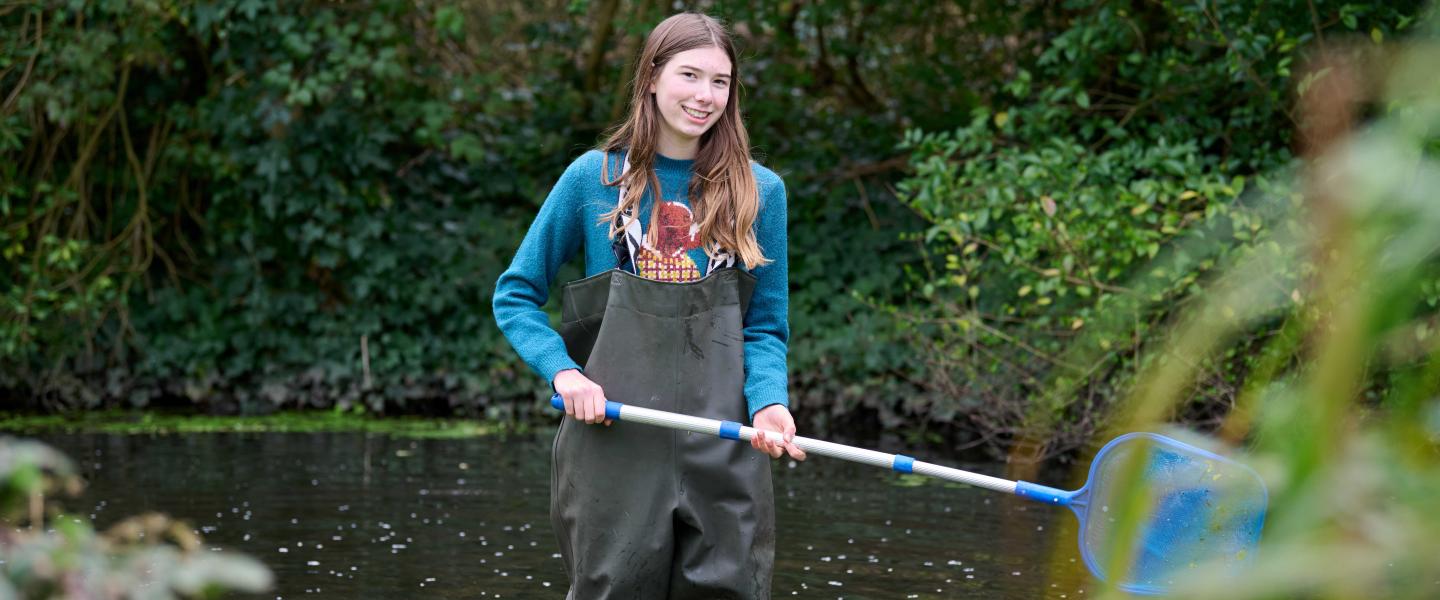
We do not teach in a traditional, classroom-bound environment. Instead, we use our beautiful 4.5-acre school grounds as a second classroom.
Movement between indoor classrooms and outdoor spaces is encouraged for all of our primary school students and secondary school ool students to help support emotional regulation, focus, and readiness to learn.
Outdoor Learning as Part of the Curriculum
For us, outdoor learning is not used as a one-off break from academics. Instead, it is woven into our primary and secondary school curricula. We take a project-based and self-directed approach to learning, which naturally extends into inquiry-based learning and outdoor exploration.
We believe learning should be relevant and meaningful to our students’ lives. Outdoor learning is a core part of this, supporting the development of key skills, nurturing curiosity, and helping children to reach great academic outcomes.
Hands-on Experiences in Nature
Our outdoor learning experiences allow children to immerse themselves in active, practical learning. We use the natural environment as a teaching tool, encouraging curiosity, creativity, and independence.
Hands-on experiences with nature help children become more engaged in learning and make it more meaningful to them. As well as having cognitive and academic benefits, outdoor learning fosters an interest in and care for the world around them.
Discover Liberty Woodland School
At Liberty Woodland School, outdoor learning is a deliberate, evidence-informed approach to education. It supports focus, strengthens resilience and allows children to engage more fully with their learning.
If you would like to see how this works in practice, I invite you to learn more about Liberty Woodland School and attend one of our upcoming open days.
Explore our setting. Experience our approach. Discover what education can look like when environment is carefully curated and used with purpose.
Book to attend an open day today


