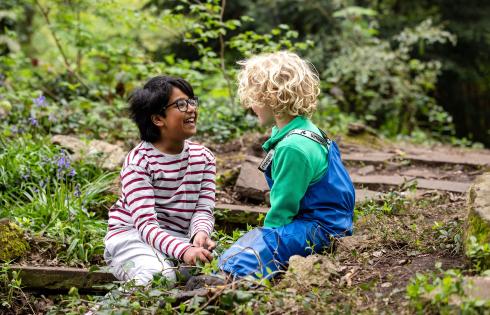
March Theme: Planet & Place
At Liberty Woodland School, we place huge value on children developing a deep sense of connection to the planet and the places they belong to. Through outdoor learning and real-world exploration, we encourage our pupils to notice, care for and take responsibility for the natural and human environments around them. This month, we’re celebrating planet and place in all its forms: from ecosystems and biodiversity to community, stewardship and belonging.. Our recommendations include:
- A core recommendation
- A challenge read
- A dyslexia-friendly title
- A non-fiction pick
- And one for parents too
Reading at Liberty Woodland is never just about ticking a box — it’s about opening doors.
| Book Picks | Why we chose this book |
|---|---|
| Core Book: The Rhythm of the Rain by Grahame Baker-Smith | A lyrical journey of one boy’s jar of water as it travels rivers, clouds, and oceans—perfect for big-picture thinking about Earth’s systems. |
| Stretch Book: The Journey Home by Frann Preston-Gannon | Endangered animals search for a safe place to live—gentle entry to habitat loss and care for our planet. |
| Dyslexia-Friendly: Snug by Michael Morpurgo, Barrington Stoke Little Gems | Two woodland stories about patience, wildlife and looking after the creatures around us—short, confidence-boosting chapters. |
| Non-Fiction: A Planet Full of Plastic by Neal Layton | Clear, friendly explanations of waste, oceans and practical fixes children can try. |
| Book Picks | Why we chose this book |
|---|---|
| Core Book: The Last Wild by Piers Torday | In a world where animals have vanished, one boy sets out to save the last herd—hopeful eco-adventure with big moral choices. |
| Stretch Book: Song of the Dolphin Boy by Elizabeth Laird | A coastal mystery where friendship and the sea collide—plastic pollution, courage and community action. |
| Dyslexia-Friendly: Good Dog Lion by Alexander McCall Smith, Barrington Stoke Little Gems | A warm Botswana tale about kindness to animals and the land—short, super-readable pages. |
| Non-Fiction: The Big Book of Blooms by Yuval Zommer | A dazzling introduction to plant life: pollinators, habitats and why biodiversity matters. |
| Book Picks | Why we chose this book |
|---|---|
| Core Book: Where the River Runs Gold by Sita Brahmachari | Children sent to farm in a controlled “perfect” city uncover how real growth needs wildness—systems thinking in story form. |
| Stretch Book: Wolf Brother by Michelle Paver | Prehistoric survival woven with deep respect for forests, animals and the balance of nature. |
| Dyslexia-Friendly: Arctic Star by Tom Palmer, Barrington Stoke | Sea, ice, navigation and endurance on an Arctic convoy; crisp chapters and dyslexia-friendly design. |
| Non-Fiction: How You Can Save the Planet by Hendrikus van Hensbergen | Practical, empowering actions linked to food, energy, oceans and rewilding. |
| Book Picks | Why we chose this book |
|---|---|
Core Book: The Carbon Diaries 2015 by Saci Lloyd | London teen diaries through the first year of carbon rationing—funny, sharp, and a brilliant lens on adaptation. |
Stretch Book: Dry by Neal & Jarrod Shusterman | A gripping “tap-out” drought thriller that asks what we do for each other when the water runs out. |
Dyslexia-Friendly: Lark by Anthony McGowan, Barrington Stoke | Moorland survival with brothers who must rely on grit and good sense; lean, powerful, super-readable. |
Non-Fiction: How to Change Everything by Naomi Klein with Rebecca Stefoff | A teen-friendly guide to climate science and movements, packed with case studies and tools. |
| Book Picks | Why we chose this book |
|---|---|
Core Book: The Marrow Thieves by Cherie Dimaline | Indigenous dystopia where land, culture and survival are inseparable—urgent, humane and place-centred. |
Stretch Book: The Overstory by Richard Powers | Interlaced lives transformed by trees; demanding but extraordinary for reflective older teens. |
| Dyslexia-Friendly Book: A Sudden Storm by Barrington Stoke | A taut, lightning-strike novella about weather, choices and consequences—ideal hi-lo read. |
Non-Fiction: There Is No Planet B by Mike Berners-Lee | Straight-talking handbook on carbon, food, energy and what works (and what doesn’t) for system-level change. |
| The Book | Why we chose it |
|---|---|
| How to Raise a Wild Child by Scott D. Sampson | Practical, joyful ideas for building children’s nature connection—in parks, gardens, city streets and beyond. |